
Hospice Care For Patients And Families In St. George
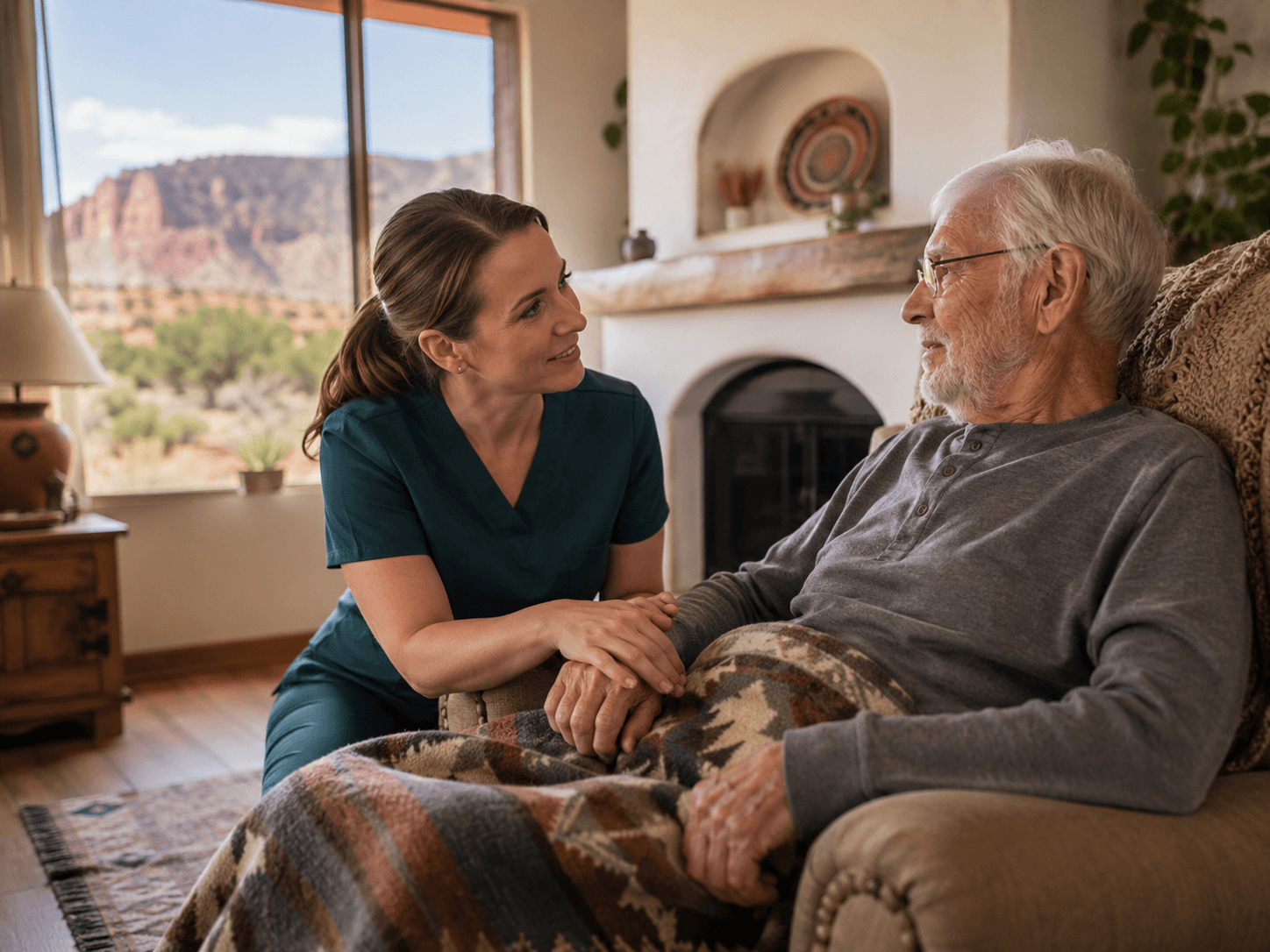
A serious, advanced illness can bring difficult decisions for patients and those closest to them. Peak Home Health & Hospice offers in-home hospice care in St. George, helping individuals spend this stage of life in a setting where they feel secure, known, and surrounded by the people and routines that matter to them.
Each plan centers on easing discomfort, responding to changing symptoms, and supporting the emotional and spiritual concerns that can arise for both patients and families. Services can take place in a personal residence, assisted living setting, or long-term care community, allowing each patient to receive attentive support in the place they consider home.
Why Families Choose Peak For Hospice Care In St. George
We Honor Every Stage Of Life
Every person deserves to be treated with respect, compassion, and consideration throughout the final stages of life. Our team listens carefully to each patient’s priorities and helps families preserve connection, comfort, and meaningful time together.
Familiar Team Walking With You
Whenever scheduling permits, the same clinicians and aides continue visiting throughout care. Recognizable faces can reduce uncertainty, strengthen relationships, and provide a reassuring sense of stability as needs evolve.
Families Receive Care Too
A terminal diagnosis affects far more than the individual receiving services. We give family members practical information, thoughtful guidance, and a dependable source of support so they can approach each change with greater understanding.
Comfort Comes First
The patient’s day-to-day well-being guides every decision. Clinical support is directed toward relieving distress, addressing troublesome symptoms, and helping each person experience as much peace and ease as possible.
Local Care You Can Trust
Our St. George professionals are part of the communities they serve. Their local presence allows families to receive timely assistance from people who understand the area and remain committed to responsive, respectful care.
In-Home Hospice Care Services In St. George
Peak Home Health & Hospice brings coordinated in-home hospice care to individuals across St. George and nearby Southern Utah communities. Rather than pursuing curative treatment, this type of care prioritizes comfort, personal preferences, and quality of life for people living with advanced illness.
Support extends beyond physical concerns. Our professionals also consider emotional well-being, family relationships, social needs, personal beliefs, and the practical challenges that often accompany a serious diagnosis. The care plan is shaped through conversations with the patient, family, physicians, and clinical team, then revised whenever circumstances or priorities change.
Services are available in multiple residential settings, including a patient’s house, an assisted living community, or a long-term care facility. Wherever visits occur, our purpose remains the same: to reduce distress, provide steady guidance, and help patients spend their time in surroundings that feel familiar and personal.

Hospice Services We Provide In St. George
Peak delivers coordinated support for eligible patients and their loved ones throughout the in-home hospice care experience.
Hospice nurses regularly evaluate the patient’s condition, observe changes, address discomfort, and teach caregivers how to respond to common concerns. They also communicate with physicians and other team members so the care plan continues to reflect the patient’s current needs.
The hospice medical director reviews clinical needs and works with the interdisciplinary team to guide treatment decisions. When appropriate, the patient’s attending physician can remain involved, helping preserve continuity and shared decision-making.
Medications connected to the terminal condition can be supplied when they are needed to control pain, breathing difficulties, nausea, anxiety, or other distressing symptoms. The team explains how each medication should be used and whom to contact when concerns arise.
Equipment prescribed for safety and comfort can be arranged for the patient’s residence. Depending on individual needs, this can include a hospital bed, oxygen supplies, mobility equipment, wound-care materials, or other medically necessary items.
Hospice aides provide respectful assistance with bathing, dressing, grooming, toileting, and other personal routines. Their visits help protect dignity while also easing some of the daily responsibilities carried by family caregivers.
Social workers help patients and loved ones work through emotional, practical, and family-related concerns. They can also assist with advance care discussions, community resources, planning needs, and communication among everyone involved.
Chaplain support is available to individuals and families who would find comfort in spiritual conversation, prayer, reflection, or compassionate presence. Services are guided by the patient’s own beliefs, traditions, values, and preferences.
Clinical help remains available after normal office hours, including overnight, on weekends, and during holidays. Families can contact the on-call team when symptoms change, questions arise, or immediate guidance is needed.
Care for the family does not end at the time of death. Grief resources and bereavement outreach are available to help loved ones process loss, adjust to change, and find support during the months that follow.
Short-term respite services can sometimes be arranged when a primary caregiver needs a temporary break. This option gives family members time to sleep, attend appointments, manage personal responsibilities, or restore their energy while the patient continues receiving appropriate supervision.
Hospice Care Delivered By Our Utah Clinical Team
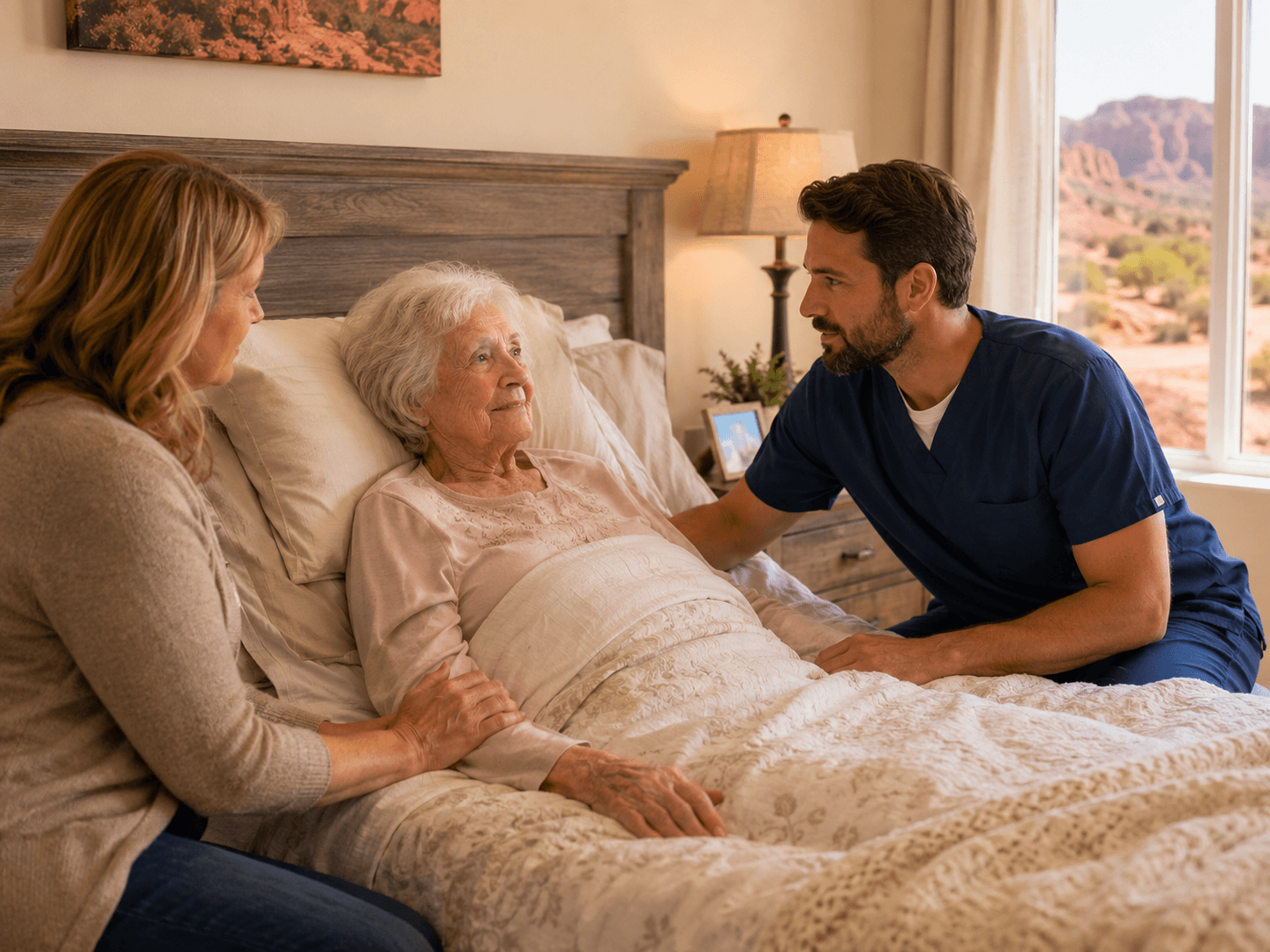
Effective in-home hospice care depends on both clinical knowledge and genuine human connection. Peak Home Health & Hospice brings together nurses, aides, social workers, chaplains, physicians, and other professionals who contribute different forms of support to one coordinated plan.
Team members share updates, discuss emerging concerns, and adjust their approach as the patient’s condition progresses. This collaboration helps prevent fragmented communication and gives families a clearer understanding of whom to contact for medical, emotional, practical, or spiritual needs.
By partnering with patients, loved ones, attending physicians, and facility staff when applicable, our St. George team helps create a more organized and reassuring experience. Each visit is intended to preserve dignity, reduce avoidable distress, and help the family feel supported through every transition.
When Hospice Care May Be Appropriate
In-home hospice care can be considered when:
- A physician determines that the patient could have a life expectancy of about six months or less if the condition continues along its expected path
- Curative or disease-directed treatment is no longer producing a meaningful improvement in daily well-being
- Pain, breathing problems, agitation, weakness, or other symptoms are becoming increasingly challenging
- Emergency room visits or hospital admissions are occurring more often
- The patient is losing strength, mobility, appetite, or the ability to complete routine activities
- The patient and family prefer to prioritize comfort, peace, and time together
Families do not have to wait until the final days to ask about services. Beginning in-home hospice care sooner can provide more time for symptom control, caregiver teaching, emotional preparation, relationship-building, and use of the full range of available support.
Paying Options For Hospice Care
Payment for in-home hospice care is often available through:
- Medicare Hospice Benefit
- Medicaid
- VA Benefits
- Many Private Insurance Plans
For qualifying Medicare recipients, the hospice benefit generally covers services and items connected to the terminal diagnosis. This can include clinical visits, prescribed comfort medications, necessary equipment, medical supplies, aide assistance, and support from other members of the interdisciplinary team.
Coverage varies according to eligibility, the payer, and the individual policy. Peak Home Health & Hospice can review benefit information with patients and families, explain what documentation is needed, and help clarify potential out-of-pocket responsibilities before services begin.
Proudly Serving St. George And Surrounding Communities
Peak Home Health & Hospice supports patients across Southern and Northern Utah through teams based in St. George and Salt Lake City. Our regional presence helps individuals receive locally coordinated in-home hospice care without having to leave the community, residence, or care setting they know.
In Southern Utah, we serve communities including:
St. George • Washington • Santa Clara • Hurricane and surrounding areas
In Northern Utah, we serve communities including:
Salt Lake City • Heber • Midway • Taylorsville and surrounding areas
Visits can be arranged in private homes, assisted living communities, and long-term care facilities. In every setting, our professionals approach patients and families with patience, sensitivity, and respect for their personal choices. Families who are uncertain about geographic availability can contact our office. A member of our team can confirm whether the address falls within our current service area and explain the next steps for requesting an evaluation.

Insurance We Accept
If you do not see your insurance listed, please call our office and we will be happy to verify your benefits and coverage.
- Traditional Medicare
- Traditional Medicaid
- VA (TriWest)
- Humana
- MotivHealth
- Some United Plans
FAQs About Hospice Care In St. George, Utah
1. What is in-home hospice care in St. George?
In-home hospice care is specialized support for people with advanced illnesses who want to prioritize relief, dignity, and day-to-day well-being. Peak Home Health & Hospice brings clinical, emotional, practical, and spiritual services to patients throughout St. George. Visits can occur in a house, assisted living residence, or long-term care setting.
2. When may hospice care be appropriate?
A physician can recommend in-home hospice care when an illness is expected to result in a life expectancy of approximately six months or less if it progresses naturally. Families can also explore it when treatment is becoming burdensome, symptoms are worsening, or hospital visits are increasing. An evaluation can help determine eligibility without requiring the family to make an immediate commitment.
3. What hospice services does Peak provide in St. George?
Peak Home Health & Hospice offers nursing visits, symptom control, physician guidance, aide assistance, social work, spiritual support, equipment, supplies, and medications related to comfort. Families can also reach clinical professionals around the clock when urgent questions or changes occur. Bereavement resources and possible respite arrangements add further support for loved ones and caregivers.
4. Does hospice care only happen at home?
The word “home” refers to the place where the patient currently lives, not only a traditional private residence. In-home hospice care can be delivered in assisted living communities and long-term care facilities throughout the St. George area as well. Our team coordinates with facility employees and family members so responsibilities remain clear.
5. How does hospice support families?
Family members receive teaching, regular updates, emotional reassurance, and practical direction throughout the patient’s illness. The team explains likely changes, demonstrates caregiving techniques, and remains available when loved ones feel unsure about what to do. Grief and bereavement outreach can continue after the patient’s death.
6. Who is part of the hospice care team?
The interdisciplinary team can include nurses, aides, social workers, chaplains, the hospice medical director, and other qualified professionals. Each discipline addresses a different part of the patient’s physical, emotional, social, or spiritual experience. Their work is coordinated with the patient, family, and attending physician whenever that physician remains involved.
7. What does comfort-focused hospice care include?
Comfort-focused support can address pain, shortness of breath, nausea, restlessness, anxiety, skin concerns, and other symptoms associated with advanced illness. It can also include personal assistance, caregiver education, emotional counseling, spiritual services, and equipment that makes the living environment safer. Every intervention is selected according to the patient’s condition, values, and stated wishes.
8. How is hospice care paid for?
Medicare, Medicaid, VA benefits, and many private insurers offer coverage for eligible patients. Covered services commonly include clinical visits, comfort-related prescriptions, medical equipment, supplies, and interdisciplinary support tied to the terminal condition. Peak Home Health & Hospice can verify benefits and explain the coverage process before enrollment.