
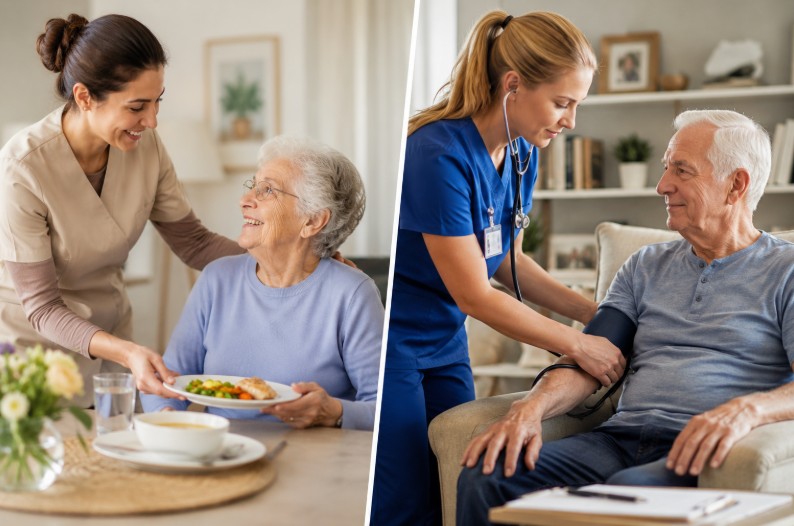
When a loved one needs support at home, many families encounter two terms that sound similar but serve different purposes: home care and home health care. Understanding the distinction can help you choose the right services and ensure your family member receives the level of assistance they need.
Although both options provide care in the comfort of a person’s home, the type of support, qualifications of caregivers, and goals of care are quite different.
Understanding Home Care
Home care focuses on non-medical assistance that helps individuals maintain independence and continue daily routines at home. These services are often beneficial for seniors, people recovering from illness, or individuals with physical limitations who need extra help with everyday tasks.
Home care providers assist with activities that make daily living safer and more manageable.
Common Home Care Services
Home care may include:
- Meal preparation
- Light housekeeping
- Laundry assistance
- Grocery shopping
- Transportation to appointments
- Medication reminders
- Personal hygiene assistance
- Companionship
The primary goal is to improve quality of life while helping individuals remain in familiar surroundings.
Who Provides Home Care?
Home care services are typically delivered by:
- Caregivers
- Personal care aides
- Home care assistants
- Companion caregivers
These professionals are trained to assist with daily activities but do not provide skilled medical treatment.
What Is Home Health Care?
Home health care involves medical services provided by licensed healthcare professionals. These services are often prescribed by a physician and are designed to help patients recover from illness, injury, surgery, or manage ongoing medical conditions.
Unlike home care, home health care focuses on clinical treatment and monitoring.
Common Home Health Care Services
Home health care may include:
- Skilled nursing care
- Wound care
- Medication administration
- Physical therapy
- Occupational therapy
- Speech therapy
- Health monitoring
- Disease management education
These services are provided according to a physician-approved treatment plan.
Who Provides Home Health Care?
Home health care is delivered by licensed medical professionals such as:
- Registered nurses
- Licensed practical nurses
- Physical therapists
- Occupational therapists
- Speech-language pathologists
- Medical social workers
These specialists have the training and credentials required to provide medical care at home.
Key Differences Between Home Care and Home Health Care
The easiest way to understand the difference is to look at the type of assistance each service provides.
| Home Care | Home Health Care |
|---|---|
| Non-medical support | Medical care and treatment |
| Helps with daily living activities | Focuses on health recovery and management |
| Provided by caregivers and aides | Provided by licensed healthcare professionals |
| Usually long-term assistance | Often short-term or treatment-based |
| No physician order typically required | Often requires a physician’s referral |
While the services differ, they can work together to create a complete support system for an individual.
When Is Home Care the Right Choice?
Home care is often appropriate when a person needs help with daily tasks but does not require ongoing medical treatment.
Examples include:
- Seniors living alone
- Individuals with mobility challenges
- Family caregivers needing additional support
- People who need companionship
- Adults recovering from minor illnesses
Home care helps reduce stress while allowing individuals to maintain independence.
Benefits of Home Care
Many families choose home care because it offers:
- Personalized assistance
- Flexible scheduling
- Increased safety at home
- Social interaction and companionship
- Support for family caregivers
These services can significantly improve overall well-being and comfort.
When Is Home Health Care Needed?
Home health care is generally recommended when medical supervision or skilled treatment is necessary.
Patients may benefit from home health care after:
- Hospital discharge
- Surgery
- Serious illness
- Injury recovery
- Diagnosis of a chronic condition
The goal is to support healing, prevent complications, and reduce the need for hospital visits.
Benefits of Home Health Care
Home health care offers several advantages:
- Professional medical oversight
- Personalized treatment plans
- Faster recovery in familiar surroundings
- Reduced hospital readmissions
- Ongoing health monitoring
Receiving medical care at home can be both effective and convenient for many patients.
Can Someone Receive Both Services?
Yes. Many individuals benefit from a combination of home care and home health care.
For example, a person recovering from surgery may receive physical therapy from a home health provider while also receiving help with meal preparation and housekeeping from a home care caregiver.
This combination addresses both medical and personal needs, creating a more comprehensive care experience.
Example Scenario
A senior recovering from hip replacement surgery may receive:
- Physical therapy sessions through home health care
- Skilled nursing visits for wound monitoring
- Home care assistance with bathing
- Meal preparation support
- Transportation to follow-up appointments
Together, these services help promote recovery while maintaining comfort and independence.
How to Choose the Right Option
Selecting the appropriate care depends on the individual’s health condition, daily needs, and physician recommendations.
Consider the following questions:
- Does the person need medical treatment at home?
- Are daily activities becoming difficult?
- Is recovery from surgery or illness involved?
- Does a doctor recommend skilled care?
- Would additional support improve safety and quality of life?
Answering these questions can help families determine which services are most appropriate.
Final Thoughts
Although the terms are often used interchangeably, home care and home health care serve different purposes. Home care focuses on personal assistance and daily living support, while home health care provides skilled medical treatment from licensed professionals.
Understanding these differences allows families to make informed decisions and ensure loved ones receive the right level of support. In many situations, combining both services can provide a balanced approach that promotes comfort, safety, and overall well-being while allowing individuals to remain at home.